
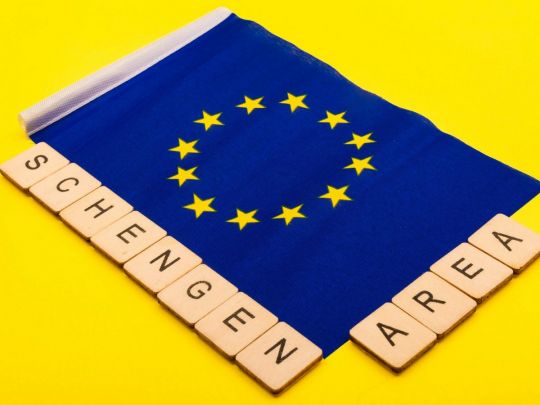

On Thursday, December 8, the ministers of internal affairs and justice of the EU countries discussed the expansion of the Schengen zone. The European Commission and the European Parliament at the end of October recommended that three states be admitted to it - Croatia, Romania and Bulgaria. As a result, the application of Romania and Bulgaria was blocked. From January 1, 2023, only Croatia will be able to join the Schengen area.
For entry into the Schengen agreement, the consent of all member countries of the agreement is required. Austria and the Netherlands opposed the admission of Romania and Bulgaria.
Austrian Chancellor Karl Nehammer stated that the Bulgarian and Romanian border guards are still subject to corruption and will let illegal immigrants into the Schengen area for money.
“We need more time. Now we have 75,000 undocumented illegal migrants in Austria. This means that they have crossed the external border of the EU and reached Austria. We need to solve this problem first, Nehammer said. He urged the European Commission to develop a plan to strengthen European borders and asked to postpone the vote on the joint application of Bulgaria and Romania to join the Schengen until August 2023.
Nehammer supported Prime Minister of the Netherlands Mark Rutte. Against Romania, he did not object, but he questioned Bulgaria’s ability to guard its external borders. Rutte even stated that migrants could enter the EU and Schengen illegally by paying 50 euros to Bulgarian border guards.
“I am not saying that this will happen, but I want clear guarantees that this will not happen,” said the Prime Minister of the Netherlands.
The position of Austria and the Netherlands caused indignation in Sofia and Bucharest. “Migration flows to the EU do not pass through Romania, but mainly through Serbia”- emphasized Romanian Interior Minister Lucian Bode.
Romanian President Klaus Iohannis warned that in case of refusal, the “growth of Euroscepticism” in the country would intensify.
“Recently, three Bulgarian policemen were killed while protecting the external border of the EU. And today, Prime Minister Mark Rutte makes unacceptable suggestions that this border can be crossed for 50 euros. Instead of European solidarity, Bulgaria is acquiring cynicism!” - indignant Bulgarian President Rumen Radev.
Interim Minister of the Interior of Bulgaria Ivan Demerdzhiev generally threatened Austria and the Netherlands with retaliatory measures. However, he did not elaborate on what he was talking about.
Remained dissatisfied with the position of Nehammer and Rutte and the European Commission.
“When we are united, we are strong. And, of course, we were not the only ones on this issue of Bulgaria and Romania. And it makes me sad”- told reporters after the vote Member of the European Commission Ylva Johansson .
“These doubts are political in nature and distract attention from two simple facts: thanks to the Schengen expansion, we are becoming stronger, not weaker. In addition, the Schengen expansion means more control over external borders, not less.” - emphasized European Commission Vice President Margaritis Schinas.
The European Commission made an official statement in which it noted that it did not know anything about the rate of 50 euros for crossing the Bulgarian border. The Commission considers that both Bulgaria and Romania are quite capable of guarding the external borders of the EU and the Schengen.
Romania and Bulgaria have been trying to join the Schengen Agreement since 2011. These countries became members of the EU in 2007.
Recall that the Schengen Agreement created a single movement zone in Europe. This allows you to cross the borders of the countries included in the zone without a passport and border control. Currently, 26 countries are members of the Schengen, including 22 EU states, as well as Iceland, Liechtenstein, Norway and Switzerland. The Schengen area is home to 420 million citizens. Of the EU countries, only Ireland and Cyprus did not apply for membership.
Earlier reported that the EU countries could not agree on the termination of the issuance of Schengen visas to Russians.
Source: Fakty