
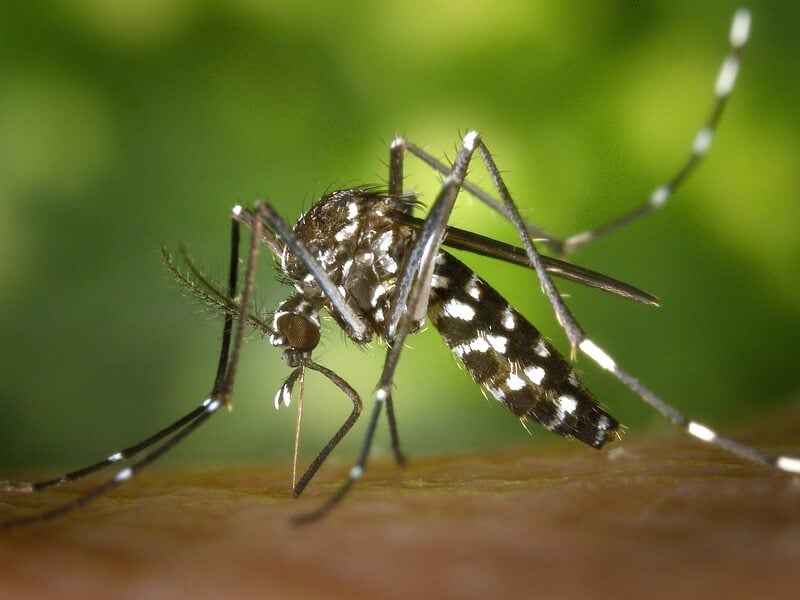
The risk of spreading tropical diseases in the “old continent” is growing These are the conclusions of the latest report presented by the European Center for Disease Prevention and Control (ECDC).
The latest data provided by the European Center for Disease Prevention and Control (ECDC) indicates that the “invasion” of Aedes albopictus and Aedes aegypti mosquitoes (which appeared in Cyprus in 2022) is progressing. Soon, insects can “settle” on the “old continent”. This is due to climate change, which has intensified recently.
Why are Aedes albopictus and Aedes aegypti dangerous?
The Aedes albopictus mosquito is a carrier of chikungunya and dengue viruses. Therefore, its bite can have serious health consequences and cause dangerous diseases - chikungunya and dengue fever.
Chikungunya - hemorrhagic fever. The disease is manifested by high body temperature, headaches, muscle and joint pains of high intensity. Symptoms usually appear a few days after the mosquito bite. Sometimes the incubation period is extended and reaches up to 12 days. The disease does not pose a direct threat to the life and health of the patient. However, there are cases when there are complications and complications in the course of the disease. We are talking about chronic arthritis, gastrointestinal complaints (diarrhea, vomiting, etc.) and cardiovascular disorders. Treatment is symptomatic.
Dengue however, it is much more dangerous. Initially, the disease causes mild symptoms. For me, it’s the flu. Fever, headache, muscle and joint pains are noted. There may also be petechiae (in the “classic” form of dengue fever) and internal and external bleeding (in the “hemorrhagic variety”). In the case of this disease, the treatment also consists primarily in relieving the symptoms. It is worth noting that dengue fever can lead to life-threatening complications such as respiratory failure, hemorrhage, or abnormalities in the functioning of organs, such as the heart.
On the other hand, the Aedes aegypti mosquito is responsible for transmitting not only dengue and chikungunya viruses, but also yellow fever, Zika and West Nile. Infection with these pathogens causes similar flu-like symptoms. However, if left untreated, it can lead to serious disturbances in the functioning of the body.
How to prevent infection?
As Andrea Ammon, director of the European Center for Disease Prevention and Control (ECDC), notes, “Efforts should be focused on how to control mosquito populations, strengthen surveillance and apply personal protective equipment.” It is very important to use mosquito nets (preferably nets impregnated with insecticide) and to be in closed or air-conditioned rooms, wearing clothing that covers most of the body.
Sources: EDCD, gov.pl.
Source: Wprost

I have worked in the news industry for over 8 years. I have a deep understanding of how the news industry works and how to get information out to the public. I am also an author at Daily News Hack, where I mostly cover health news. I have a keen interest in health and fitness, and I firmly believe that knowledge is power when it comes to taking care of your body. I want to help people live healthier lives by sharing my knowledge with them, and LinkedIn is the perfect platform for me to do that.