
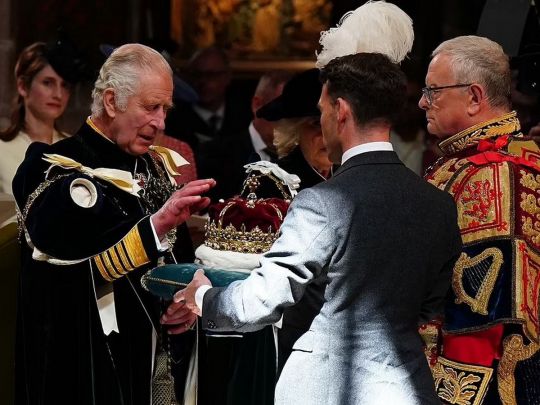
In Edinburgh, the capital of Scotland, a solemn ceremony took place, which many Britons call the second coronation of Charles III and Camilla. There is every reason for this. During the National Thanksgiving Service at St. Giles Cathedral, the King was solemnly presented with the Scottish Crown Jewels, officially called the Honors of Scotland. In essence, this ceremony was on the part of the Scots the recognition of Charles and Camilla as the rightful king and queen.
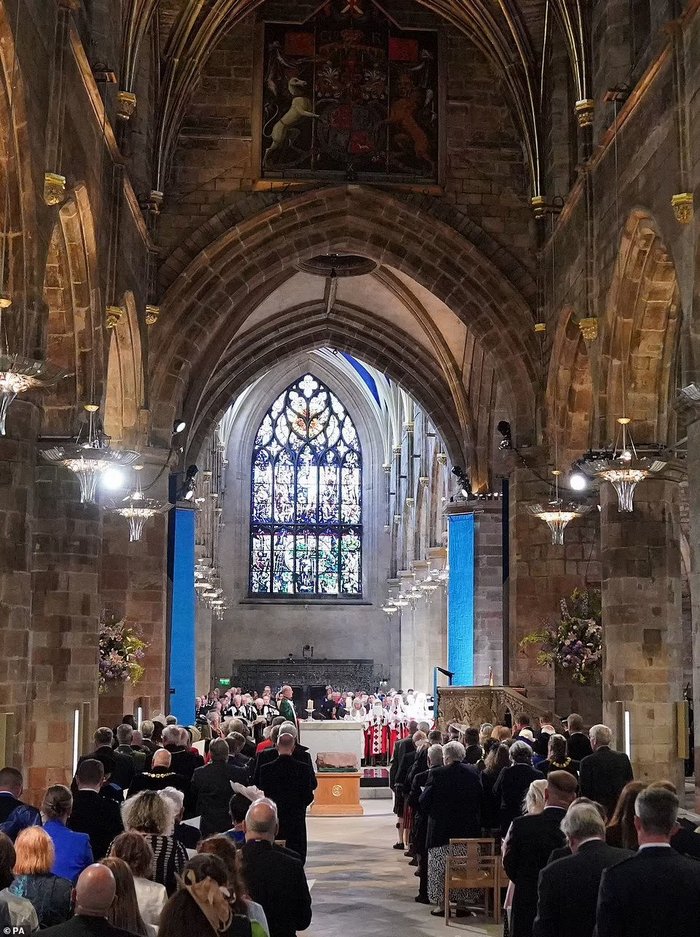
The honors of Scotland are the crown, the scepter and the state sword. They are made of gold, silver and precious stones, but this is not what makes them so valuable. These three items are the oldest British Crown Jewels.
The crown was made for James V, wearing it for the first time at the coronation of Queen Mary of Guise in 1540. Mary, Queen of Scots was the first to be crowned using this crown, as well as the 1543 scepter. It is believed that the scepter was presented to James IV by the Pope.
The sword was also made in the 16th century. However, it turned out to be quite fragile, so it was recently decided to make an exact copy of it. And he received the unofficial name of the sword of Elizabeth.
The Honors of Scotland have a very turbulent and mysterious history. In 1651-1660 they were carefully hidden from the army of Oliver Cromwell.
1707 An Act of Union was signed between England and Scotland. And the crown, scepter, sword were locked in a chest, sealed and walled up so that they were considered lost forever.
In 1818 the famous writer Sir Walter Scott discovered the Honors. It was decided to keep them in Edinburgh Castle.
Charles Honors of Scotland was presented by Professor David Fergusson, Dean of the Royal Chapel and Dean of the Order of the Thistle. Of course, the gift was symbolic - after the ceremony, the crown, scepter and sword were returned for public viewing to the hall on the first floor of the Royal Palace on the east side of Crown Square in Edinburgh Castle.
A sermon at St. Giles Cathedral was delivered on this solemn day by the moderator of the General Assembly of the Church of Scotland, Rev. Sally Foster-Fulton.
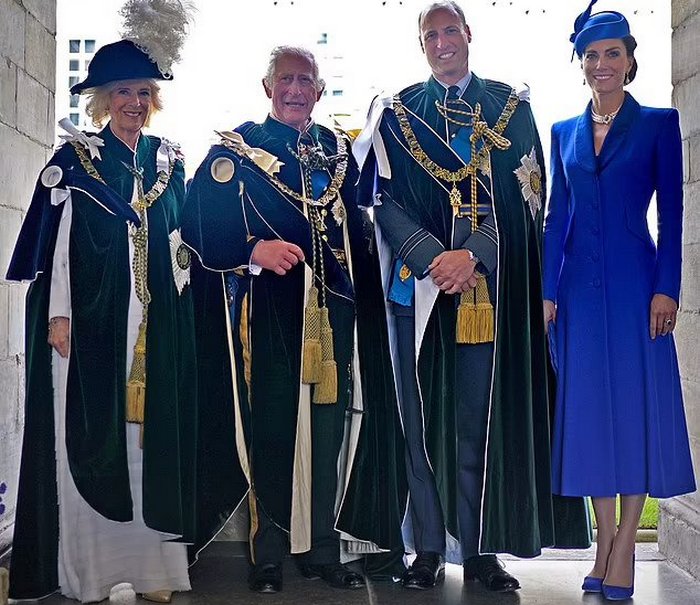
Charles and Camilla arrived at the cathedral from Golirood Palace, the official Scottish residence of the British monarch. They were brought in a limousine.
The Prince and Princess of Wales joined the King and Queen. By the way, in Scotland they are usually called differently - the Duke and Duchess of Rothesay. Kate Middleton chose a blue Catherine Walker coat dress for the big day. She has already worn this outfit for several formal occasions, such as Easter Sunday.
The British media emphasize that Charles strives in every possible way to appear at public celebrations with William and Keith. Thus, he makes it clear to everyone that the Prince of Wales is already ready to become the next king of Britain. For Charles, it is important to emphasize the continuity of generations in the royal family.
By the way, the service in Edinburgh repeated the event held here in 1953 in honor of the ascension to the throne of Elizabeth II.
Before the service, the Honors of Scotland were taken from Edinburgh Castle to St. Giles Cathedral by members of a special procession - the so-called Royal Mile was about 100 people who play an important role in various areas of Scottish society.
Well, what is a coronation without a military parade? It was attended by over 700 members of the Royal Navy, the British Army and the Royal Air Force.
It all ended with a salute from 21 guns and a flight over Edinburgh of a special unit of the Royal Air Force “Red Arrows”.
It wasn’t without problems. Several groups and organizations advocating the abolition of the monarchy and the granting of independence to Scotland held rallies and protests in the area of the Royal Mile and St. Giles Cathedral, as well as in front of the Scottish Parliament. The police detained four people.
Earlier wrote about how Britain congratulated the monarch on his birthday.
Source: Fakty

I am Joseph Zeman, a journalist who mostly covers world news for the Daily News Hack. I pride myself on being able to find and report stories that others might miss. I have a knack for being able to see both sides of every issue and this allows me to provide readers with well-rounded stories. In addition to my work as a journalist, I am also an author and have written several books on current affairs.