
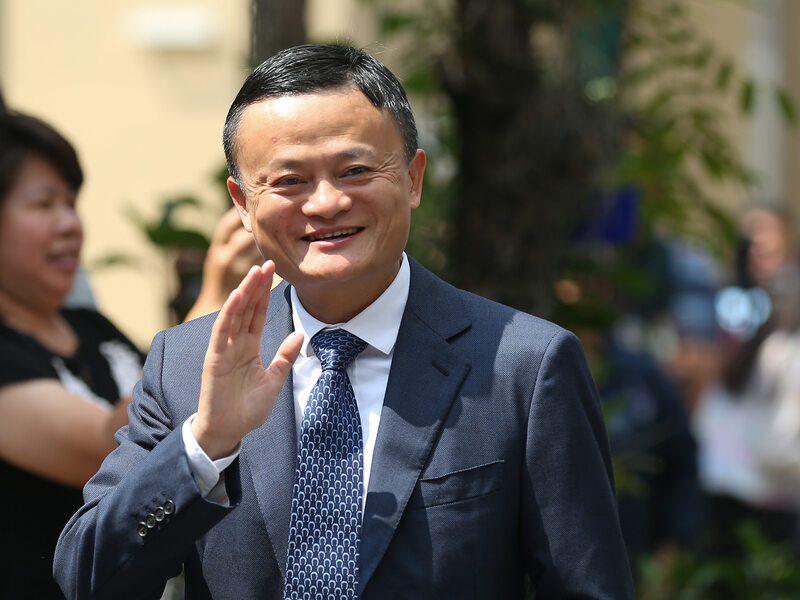

When the trail of Jack Ma, the founder of the holding company Alibaba, was lost after a rather laconic criticism of the Chinese authorities, foreign journalists and businessmen began to suspect that he might be dead or - and this is the optimistic version - in prison. Such fears were fully justified. Chinese millionaires “disappear” from time to time and find themselves in amazing circumstances. Recently this happened to the president of a large bank.
At the end of February, in a laconic communiqué, Chinese bank China Renaissance said that its chairman, Bao Fan, had been found and was “cooperating with the investigation” being conducted by the authorities. What the investigation is about, which body is conducting it, and what happened to the billionaire in those weeks when he was considered missing - not a word.
Billionaires are disappearing and their companies are being targeted
Probably many independent observers in China ask themselves this question, but stating it out loud can get you into trouble - as do many Chinese journalists, dissidents and… billionaires. Big money and influence are no guarantee of security. Criticism of the authorities, even veiled, can provoke powerful retribution.
So it was with the founder of the Alibaba holding. At the end of 2020, multimillionaire Jack Ma - the third richest man in China, and according to Bloomberg - the 25th richest man in the world - stopped showing up in public. Soon people began to suspect that it was not the fatigue of life in the spotlight, but that he was harmed by the authorities. During the Shanghai summit, he criticized the state’s dominance and influence over banks. On October 24, 2020, Jack Ma compared government agencies to pawnshops that “stunt business growth.” This may have been taken as open criticism by the Chinese Communist Party. It was the last public appearance of the entrepreneur.
The mysterious disappearance of Alibaba’s CEO
Soon after the speech, Alibaba Group came under scrutiny from Chinese regulatory authorities. The authorities also allegedly punished Ma by suspending the Ant Group subsidiary’s $37 billion initial public offering (IPO). In December, just before Christmas, an antitrust investigation was launched against the Alibaba Group. Within a few months, Ma lost more than $10 billion.
It wasn’t until late 2022 that Jack Ma was confirmed to be alive, but outside of China. Together with his closest associates (including a cook), he moved to the capital of Japan, from where he conducts international charitable activities.
Not all businessmen returned to work. Some are in prison
Jack Ma was not the first “disappearing billionaire,” but Chinese-Canadian businessman Xiao Jianhau was more fortunate (before his arrest, his fortune was estimated at $ 6 billion). In 2017, he was arrested and sentenced to 13 years in prison for corruption. He was reportedly previously abducted from a hotel room in Hong Kong by plainclothes police from Beijing. It didn’t help that he had previously maintained close ties with the top leadership of the Chinese Communist Party.
In 2020, real estate tycoon Ren Zhiqiang disappeared for several months after allegedly speaking out against Chinese leader Xi Jinping’s behavior. Ren was eventually sentenced to 18 years in prison for corruption.
In August 2018, casino operator Landing International Development announced the disappearance of its then CEO, Yang Zhihui. As if nothing had happened, the businessman returned to the office after 3 months. He explained that he was helping the authorities with some kind of investigation.
Is this a red flag for the rich?
Also, participation in “some” investigation was explained by the absence of one of the most famous Chinese bankers Fan Bao, president of China Renaissance. He has returned to work - he has to get the bank out of the hole in which he fell after the mysterious disappearance of his president. Investors were so worried that China Renaissance shares fell 50% at the worst possible moment.
The Chinese authorities make sure not to take any illegal actions against the richest businessmen. They act when corruption is suspected. Here are the official explanations. Chinese experts see a different connection here: after years of relative liberalization and acceptance of private fortunes, the communists want to curb the independence of businessmen and increase control over billion-dollar enterprises.
Speaking of “disappearing billionaires”, Nick Marro of The Economist Intelligence Unit told the BBC that “this reflects an attempt to centralize control and power over a certain part of the economy, which was a key feature of Xi Jinping’s management style.” [przewodniczący Chińskiej Republiki Ludowe – red.] over the past decade.”
Foreign businessmen do not want to share the fate of “disappearing billionaires”
In turn, Paul Triolo, head of China policy and technology at global consulting firm Albright, pointed out that Chinese rulers are constantly trying to prevent large technology platforms from developing too freely, because then they will be harder to control.
This atmosphere of uncertainty created by the authorities may deter foreign investors. “Businessmen will think twice about the fate of Jack Ma,” Triolo said. Xi Jinping assures that honest people have no reason to worry - in a speech at the Chinese Communist Party Congress a few days ago, he even emphasized the importance of the private sector - but this does not completely dispel the atmosphere of fear. The seed of uncertainty has been sown.
Source: Wprost

I am George Brown, author at Daily News Hack. I mostly cover economy news and I have been doing this for quite some time now. I have a lot of experience in this field and I’m always looking for new opportunities to learn more.