
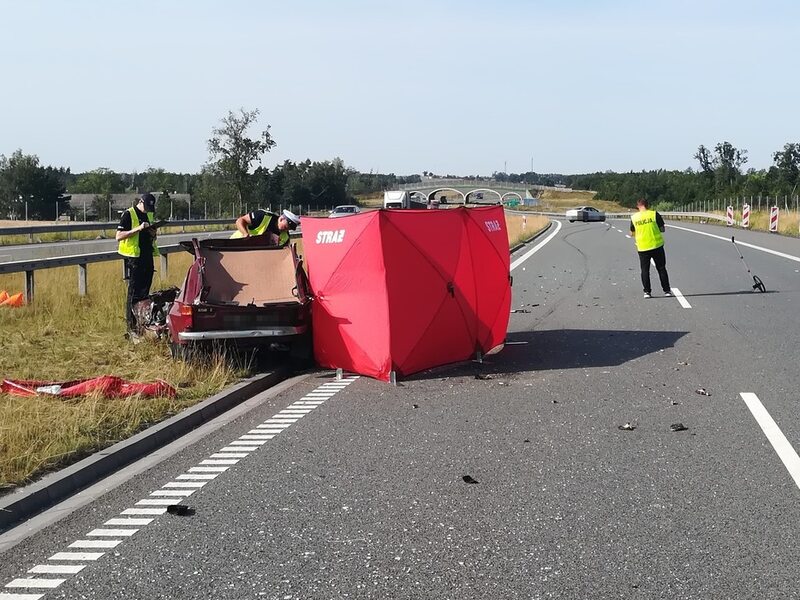
Drivers very often do not know how to behave when they witness serious traffic accidents. And this despite the fact that they are taught in courses what and how they should do. However, stress can be felt and ignorance leads to mistakes. So let’s summarize what a good driver should do when he sees an accident.
Undoubtedly, a traffic accident can be a shocking experience not only for its participants, but also for witnesses. Many drivers, passing by the scene of an accident, deliberately slow down to look at it. However, it is important to remember that this behavior can cause traffic problems and confuse other drivers. In addition, driver distraction is dangerous and therefore a serious hazard on the road.
- When driving past the scene of an accident, you should increase your vigilance even more and if you see that help is already on the spot, do not slow down and do not block the passage - says Adam Bernard, director of the Renault Driving School.
Do not film the scene and victims of the accident
Unfortunately, the scene of an accident is often filmed or photographed by passing drivers. If the driver holds the phone in his hand, paradoxically, he himself can become the culprit of a dangerous event.
When traveling abroad, be aware that documenting accidents by bystanders can have serious legal implications. For example, in Germany, filming and photographing traffic accidents and their victims is a crime punishable by severe punishment, regardless of further dissemination of this content, which is also punishable. This is not only about improving traffic flow, but also about not interfering with the work of people providing assistance and about protecting the privacy of victims by not exposing them and their loved ones to possible contact with publicly available materials from the scene.
Do not interfere with emergency services
Slowing down when driving past the scene of an accident when it is not necessary can lead to a traffic jam that prevents an ambulance, firefighters or police from quickly arriving at the scene of an accident. Getting help quickly can be critical to the life or health of a crash victim. Therefore, drivers should remember that they have an obligation to facilitate the passage of emergency vehicles, in particular by immediately getting out of their way and, if necessary, stopping.
When approaching a busy section of the road, it should always be borne in mind that it may be necessary to create a so-called. corridor of life, i.e. free space for the passage of emergency services. Therefore, if we are driving on the right lane, it is worth sticking to its right edge in advance, if on the left lane, let’s stay closer to its left side.
Secure the scene and call for help
It may happen that, having witnessed the accident, we will be the first to be on the spot and help others. For this reason, it is worth taking with you, in addition to the mandatory fire extinguisher and an emergency stop sign with the appropriate approval, a first aid kit and a reflective vest.
-
If possible, position your vehicle so that it hides the scene of the accident.
-
Turn on your emergency lights or parking lights, and after dark, position your car so that its headlights illuminate the scene of the accident.
-
Make sure you can get out of your car safely, never go straight into a busy street.
-
Before getting out of the car, put on a reflective vest, be visible to others.
-
Take the warning triangle, first aid kit and fire extinguisher from the car.
-
Do not forget to lock the car - unfortunately, there are cases of robbery of people helping victims of road accidents.
-
Place a warning triangle 100m behind the vehicle on the freeway. On the road outside the settlement - at a distance of 30-50 m, but in case of poor visibility and at night, for safety, it is best to place the triangle a few tens of meters further. In built-up areas, place the triangle a few meters behind or above the vehicle, but no higher than 1 meter. If the scene is around a curve or slope, place the triangle in front of the curve or slope. A properly set warning triangle will allow other drivers to react in a safe manner, such as braking or changing lanes early.
-
Make sure that neither you nor the wounded are in danger.
-
Assess the situation, check the number of victims and their condition and, if necessary, call an ambulance as soon as possible (phone 112 or 999). The ambulance dispatcher will notify the fire department and the police.
Help the victims
Bystanders of an accident are sometimes hesitant to provide first aid, for example, for fear that they might cause further harm or that their assistance would still be insufficient. However, it is important to remember that rescue action is your responsibility, whether successful or not, what matters is trying to help. Untimely appeal for help reduces the chances of survival of the wounded.
First of all, make sure that the rescue work does not involve the risk of death or serious injury to you or other people, such as a small child, who will have to be left alone on the road. The actions we take must be necessary, but also within our means.
If necessary, first aid instructions before the arrival of the ambulance, using the available means, can also be given to us by the ambulance dispatcher.
Source: Wprost

I am Jason Root. I work in the news website industry and mostly cover the automobile industry. I have also written for Daily News Hack. My work revolves around new car models, prices, and features. In addition, I often write about used cars and tips for buying them. My articles are meant to be helpful for those who are in the market for a new or used car.