
It is important for summer residents involved in the cultivation of vegetables and fruits to know the acidity of the soil and, taking this into account, plant plants. After all, some cultures like acidic soil, others do not. In too acidic soil, plants begin to hurt.
The authors of the channel “My dacha. Garden and Garden” explained how to determine the acidity of the soil, in particular with the help of weeds.
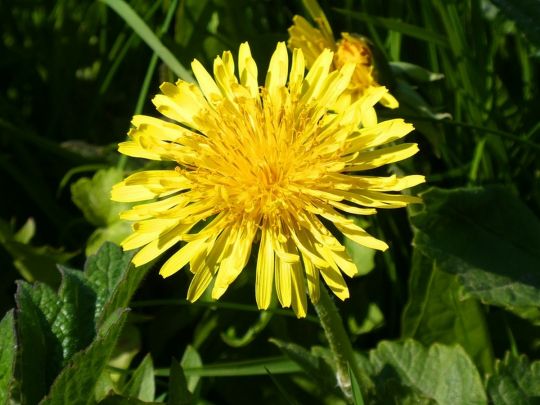
So, if the site is overgrown with sorrel, plantain, wild mint, then the soil is highly acidic. Nettle, shepherd’s purse, quinoa grow on neutral, and wheatgrass, chamomile, dandelion grow on slightly acid.
Beets can also tell about acidity: on acidic soil, its tops will be red, on slightly acidic soil - green with red, and on neutral red there will be only cuttings.
You can determine the type of soil using blackcurrant leaves. A few leaves need to be poured with boiling water and let it brew, and then add earth to the glass. The red color of the liquid will indicate high acidity, pink - medium, green - neutral, and blue - low.
Can help in research and vinegar, which will show the presence of lime in the ground. If, after vinegar (3-15%) is poured onto the soil, then the presence of bubbles will indicate a neutral or alkaline soil, if there are none, it will be acidic.
By the way, a weed can not only tell the degree of soil acidification, but also become a good fertilizer for plants, especially in a fermented form. To do this, they are kept in the sun for several days in black bags, and then they are poured with water and insisted. Next, the resulting infusion is diluted with water and the plants are fed.
Pixabay Photos
Source: Fakty

I am currently working as a news website author at Daily News Hack. I mostly cover trending news and have been doing so for quite some time now. I have always had a keen interest in current affairs and the world around me, which is what led me to my current job.