

Whenever I watch a movie with an Asian character set before the 2000s, I get a little worried. It’s been a long journey of Asian representation in media and entertainment, but looking back can be painful at times. Favorite movies like Sixteen candles as well as Breakfast at Tiffany’s leave me with a sour taste in my mouth, not because I couldn’t understand Sam’s very American wrestling as a teenager, or because I wasn’t enamored with Holly Golightly’s eccentricity, but because those movies had caricatures of people like me. They turned Asian faces into jokes. This has always been my fear and why I avoided Karate Kid. The thought of a wise and experienced Japanese man teaching karate to a white boy from New Jersey immediately made me think, “No, I’m going to miss that bit of nostalgia.”
I don’t think that was fair, given that I’ve never seen the film. But I got tired of being angry and a little ashamed when I saw these images, and I didn’t want to be disappointed again.
Cobra Kai made a difference for me

But then I started looking Cobra Kai. Partly because my job is to keep up with popular shows, but also because I was curious. The series started on YouTube Red before being acquired by Netflix and featured original cast members from the films and seemed to be loved by the masses. Also, I didn’t think I would stumble upon racism or racist sentiment in a series that was made in 2018. So I started watching it.
And to be honest, I was immediately fascinated by the characters on the show. From Ralph MacchioDaniel LaRusso William ZabkaJohnny Lawrence, two characters I was only familiar with through pop culture osmosis, for newbies on the block like Xolo MariduegnaMiguel Diaz, Tanner BuchananRobbie Keane and Mary MauserSamantha LaRusso.
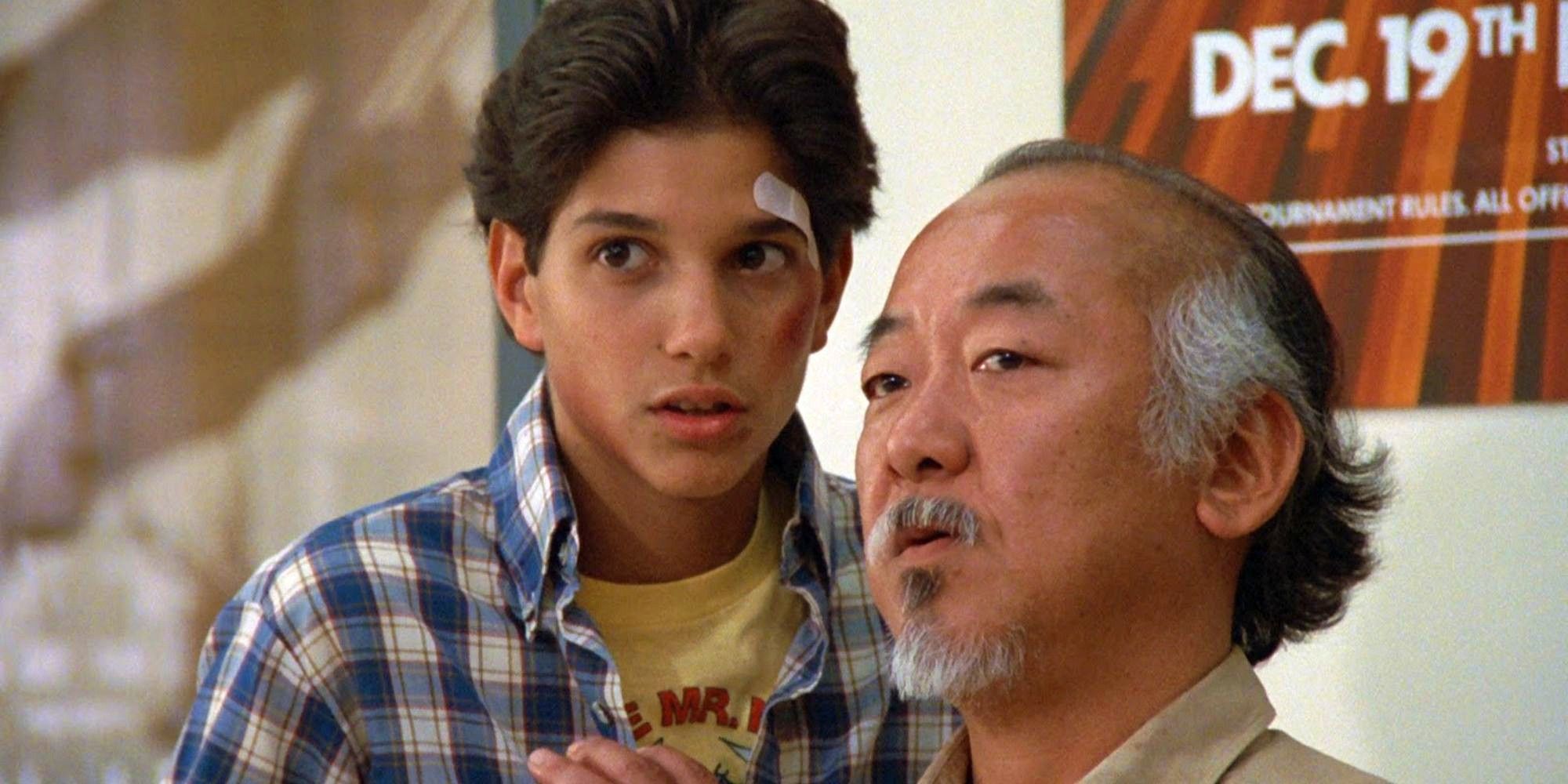
The series thankfully filled in some of the gaps in my knowledge of what happened in the movies. But looking back at the movie flashback made me realize that the movie was actually not as bad as I had imagined. Mr. Miyagi played by Pat Morita, he had a strong Japanese accent but his words were impressive and Daniel respected him and not the character we were laughing at. He didn’t seem to be the butt of jokes and often acted as a loving father and protector to our protagonist. So, after watching the series on Netflix and talking about it at work, I decided to give Karate Kid shot.
Mr. Miyagi was an outstanding character

It’s amazing what stood out to me from the point of view of someone who’s seen it all Cobra Kai. Scenes with Daniel and Ali (Elisabeth Shue) felt like filler, it was cute but didn’t matter in the end. Meanwhile, the heart of the movie was really about Daniel and Mr. Miyagi. Even Johnny playing such a big role in the series felt like a very small part of the movie.
After seeing Morita play Miyagi, I immediately saw how Daniel was influenced and inspired by him. His lessons went beyond just learning karate, they were life lessons. Sometimes he was strict and serious, but then he was also warm and caring. He was a man who suffered greatly, but still managed to remain an honest and decent person. My fears that Miyagi would fall into the stereotype of an exemplary minority, meek and quiet, were allayed by the way he not only stood up for himself, but also the way he defended Daniel.
The way the film slowly develops the bond between Miyagi, the man who lost his wife and child, and Daniel, the fatherless child, is extremely rewarding to watch. Macchio and Morita have great chemistry in scenes together, and Miyagi slowly transforms from teacher to father figure. As Daniel learns more about Miyagi, learning one night that Miyagi’s wife died in childbirth at the Manzanar internment camp while he was fighting in World War II in Europe, he begins to see his mentor differently.
These moments view Miyagi’s life not as Daniel’s teacher or guide, but as an Asian American struggling with the trauma of the past and his own identity. This is a man who fought for a country that put American citizens in concentration camps and looked at them as an enemy, lost everything, and yet managed to keep it together. He was different, mourned all his life and sees in Daniel the son he never had. It’s amazing how all of this translates into a film that, at first glance, is simply about a kid moving to a new city and dealing with girls and bullies.
The Karate Kid creates an entire franchise of strong storytelling
_q-50-fit-crop-w-1500-dpr-1.5.jpg)
I say all this not because it was the only thing that stood out in the film, but because it was these scenes that ultimately won me over. I clearly enjoyed the music and the karate scenes, especially the All-Valley Tournament finale. But also knowing where the path will end, thanks to Cobra Kai, made me less careful about learning the path that led to this. Knowing that the elderly Daniel inherited Miyagi’s outlook on life and teaching style and still respects him, and knowing that his family sees him as part of the family, and Miyagi even knows little Sam, has given me solace that I go out of my way to do. tried to find elsewhere. .
Watching the show at first offered unexpected insight. Beginning with Cobra Kai, it was pretty easy to sympathize with Johnny, who as an adult was frazzled, miserable, stuck in the past and just trying to deal with it day after day. After learning that his actions in All-Valley ended up ruining his life, we see a scene in which we see him swinging his leg. Karate Kid the more tragic. Going into the movie without this knowledge, Johnny seems to be just a bully with some serious problems. He doesn’t actually have many scenes where his character is explored. Although the few scenes we get with him in All-Valley show a glimpse of the man he will become. Not really a bad person, but misled by a person who was also broken by the war.
Karate Kid Ultimately, it’s a story meant to inspire, it’s a story of a loser. In itself, this is interesting and at times unusual, but when combined with a grander scheme of things and cobra kai, this creates a dynasty of strong storytelling that is much more than just showcasing cool karate moves.
Grade: BUT
Source: Collider